These are my musings and observations on my daily life, loves and the laughter that are all a part of my experience of living now in the shires of England.
Showing posts with label belonging. Show all posts

Tuesday, 9 April 2013

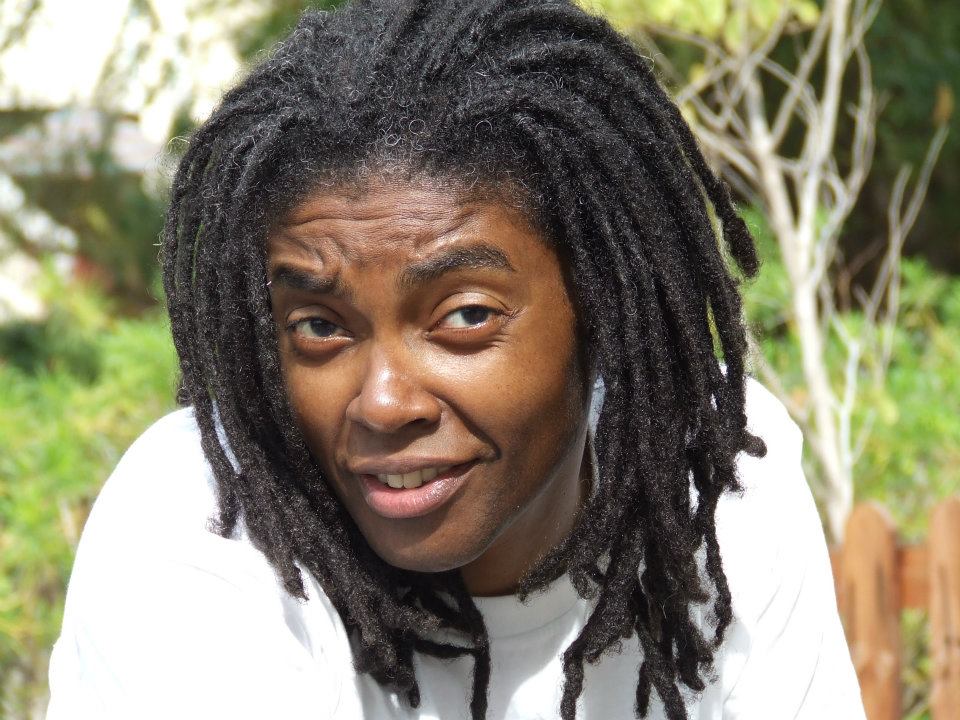
I am not my hair

I am not my hair ...

My hair – 9th April 2013 
... but what will it be like tomorrow? 
© Marjorie H Morgan (2013) 


“You have good hair”
“Is it real?”
“Can I touch it?”
“Have you got any weed?”
“Ha! Jackson 5 hair.”
“Is it all yours?”
“It feels like a carpet.”
“Can I use it for a weave?”
“How do you do it like that?”
“Do you have bad hair?”
“I like it when you wear your hair down.”
“I like it when you wear your hair up.”
“Can I play with it?”
“Is it hard?”
“Is it soft?”
“Does it hurt?”
“It suits you.”
“I don’t like your hair like that.”
“How often do you wash it?”
“Can you comb it?”
“Does it feel like a Brillo pad? It looks like one.”
“Your hair is so soft.”
“You have tough hair.”
“Have you ever cut it?”
“Don’t cut it.”
“Cut it, it’s too long.”

I am not my hair. My hair is part of my identity. Or so it seems. People always have a lot to say about other people’s hair. I have been no exception. I have shared a few of the comments I have heard over the years. These are all fresh in my mind now because I am thinking about cutting my hair – much shorter.

I have no idea why this thought process has taken so long to come to any sort of firm conclusion so I’m releasing them here to find some clarity.

For years as a child I was told that I had “good hair”. What is that exactly? What makes hair good or bad? It’s ability to grow faster than other hair? I guess so because mine did (and still does) just that.

I am on my second lot of locs. The first set I cut off completely about 9 years ago. Back then I grew them down my back, pretty much the same as I have now; this lot is longer – I can almost sit on them now. My history of locs seem to be a cycle of letting them grow and then cutting them off, but the cutting time also appears to have been delayed by me right now. I’ve been musing on a quick trim, a medium cut, or a totally new start for a while but still I hesitate and the scissors stay sheathed. Why is it such a big issue to cut my hair right now – I think it’s starting to become a big thing so I’ve been reflecting on the history of my hair and hair as part of identity.

I’ve looked back at my photographs and remembered what I was doing when I had different hair styles. My hair really does tell a journey of my growth and change in different circumstances. But surely that was my hair changing and not me? Different hair styles show a difference but they don’t show all of me. I am not my hair.

However, I do like having some hair. You see, I’ve been thinking about the loss of hair – through accident, illness, age, or choice. Each situation has a different affect on the person involved. Hair is more important that I first gave it credit for. It’s part of a uniform, a means of entry or exclusion from different groups; it is a badge of identity. Hair has a character all of its own. Hair is both political and social. How your hair is worn has links to gender divisions, theories about sexuality, images of beauty and power and concepts of ‘wrong’ or ‘right’ hair.

Hair speaks volumes whether a skinhead or locs-head. Hair, like eyes or clothes, is a window into a person’s identity.

This has led me back to thinking.

I am not my hair ... or am I?

To snip or not to snip? That is the question ...

India.Arie - I Am Not My Hair ft. Akon


Tuesday, 21 February 2012

In the Ark


Many people are familiar with the story of Noah’s Ark – even those who have no religious inclination know this tale.

I had reason to reconsider what it was like inside the ark when I was away from familiar surroundings earlier this week. I was not scared because of any end of the world prophecy neither was I about to be covered in a deluge of water – although it had been raining earlier that day. No, rather than that, I was thinking of the amount of love and joy that was in that structure. There was a feeling of connection, purpose and shared future right there. It weaved itself between smiles, hugs and handshakes. Everyone was joined together by an invisible but strong thread of love. I was sat inside a pub (an unusual location for me on any given day, especially a Monday afternoon), nevertheless I was aware of the way I was feeling whilst there.

Inside that pub, remote from my home, I felt more at peace and comfortable – no doubt, like the original inhabitants of the ark – than I do when I attend my weekly church service. That fact disturbed me, merely because of the alienation from peace that accompanies me in the company of people who profess to be Christians but often show habits that would not be out of place in an SS meeting.

The family and friends gathered in that pub were mostly strangers to me, yet they were genuinely warm and welcoming to me. I felt at home. I felt safe in the pub that became my ark for the afternoon.


I will continue to find safety in the mobile ark that I am constructing – according to God’s plans for my life, and I hope that I will someday replicate that feeling of safety that I experienced in the pub in more places that I frequent, especially my weekly church attendance.


Thursday, 16 February 2012

Sewer life


This could be my weekly ‘How dare you?!!’ piece.

Things people don’t understand they either destroy or hide from their view. By labelling someone or something as different and less than desirable it seems to make for the sanitised view of the world that they seek.

All fears are labelled grotesque and monstrous and war is declared with them. This could be outright murder and genocide or more subtle means of annihilation. You see, there are other means of destroying people, ideas and places as well. The ruling powers can either hide them away (metaphorically in the closet) or flush them away in a sewage-like system.

This is the way life is for many visible minorities that the ruling homogeneous groups want to achieve. You may be a Muslim in a predominantly Christian world, you may be homosexual in a mainly heterosexual world, you may be African in a mostly European world, whatever the difference that is abhorred the result will be the same: a systematic rite of ‘cleansing’.

If you take time to look at the sewage systems of most developed countries you will discover that it is the home for unwanted items of the everyday so-called civilised society. It is where things are dumped and remain ‘out of sight and out of mind’. Sewage systems are usually designed to function below the surface of the ‘usual’ everyday behaviour.  

When people want to condemn you and your ordinary life to the sewers I believe you have a right to stand up and shout, “How dare you?!!”


Friday, 3 February 2012

Connections


Some connections are impossible to break. At least that’s what I feel.

A friend of mine gave me an example of this when we were talking the other day. We all hope our relationships will last forever, but sometimes cracks begin to show that cause you to think. It may just be that she is a mother of several children that she says this, but I think it runs deeper than that.

I was hugging her good bye and she repeated her usual comment to me about her family. “We are all one,” she said, “you are my family. I am here because of you. I love you and my children love you.”

I smiled a warm smile back at her as we parted.

We had been talking about so many things – as good conversations do and one of the topics was her relationship with her partner. I said he was a lovely man and she smiled and said, “Yes, he is, but that’s only the side he likes to show to people. Behind the scenes it’s different.”

I was shocked. She could see the disbelief on my face. “But, “ I stammered, “but ...”

“He is a good man,” she said, “and I love him but ...”

I waited for her to finish the sentence. I didn’t have any words that would fit into that heavy space that was now between us.

She smiled then, hugging me again she said, “We all have to be happy. In here.” She pointed to her heart. I nodded and murmured my agreement. I knew there was something else she wanted to say, so I hesitated from going towards the door. Taking a step closer to me, she said, almost casually, “I can’t love one man and leave the care of my children. He can go at any time. They remain forever.  They are mine.”

Deep connections remain deep.


Saturday, 10 December 2011

Not invited and blissfully happy


By now you’ll have realised that I am a tad quirky and I have several encounters that I consider strange. Lord alone knows what many of you think about them ...
But, here is another one.

I was not invited to an event. I went. I had a wonderful time. The hosts were more than happy for me to be there ... seriously.

This is why ...


A birthday party was arranged. Guests were invited and the venue was prepared. I knew all about it, so I went along at the time that I knew it would start.

Hours later, after much fun, laughter, dancing, singing and playing had taken place, I left.

The following day I received a series of phone calls from the hosts, they were thanking me for being there, 
for their son’s first birthday party. I smiled and thanked them for the invitation and started to explain that I had had a great time.

They stopped me and said, “You weren’t invited ...” I didn’t know what was coming next but the laughter in the voice told me it was nothing to be ashamed of, “You don’t need to be invited,” the baby’s mother continued. “You are the same as us, you are family, we are one.” I laughed again and thanked her, but she hadn’t finished, “We will never invite you to anything as this is your home as well, you can come and go as you please. You helped us to plan it, without you it would not have been such a great success. You always make things wonderful. You play such a big part in our lives. We are one, sister, we are one!”

So, there you have it. I was not invited to an event. I went. I had a wonderful time.


Friday, 9 December 2011

Stolen identity


Every now and then I get incensed. You may have noticed it.

This time it is not just for me. I know I am often wronged, but in the main I can deal with those injustices, this time I am deeply unsettle (to put it mildly) because of the insidious creeping strategy to steal young people’s identity and disenfranchise and disenchant them with one foul swoop.

How is this done? To whom is it done?

I believe this crime is committed at school, in the shops, on the street, in youth clubs, and in homes across the country.

While in primary school, children usually retain a sense of belief in equality; they are all the same, they play together, eat lunch together and learn together.

When they are fed into the secondary school system it all changes. Many of the staff that deliver the lessons fail all the pupils because they cannot deliver information that they do not believe it. This machine of dictated and organised thinking has a fixed, out-dated model of Britain and it is devastating lives every day. The damage done at school continues throughout life. Meritocracy as an ideal is debunked at every turn, in most subjects across the spectrum. Divisions and disadvantage are taught in a formal manner and take root, like concrete boots.  

I’m talking about English, Scottish, Welsh and Irish people: British people. These British people, like me, are home but are still treated as foreigners.

When I worked in the computing and banking industries my CVs often when ahead of my interviews. There were many occasions when the interviewers – without disguise – said, in total shock, “But ... you’re black! From your CV I thought ...” I got used to it, however, the painfulness of the blows left deep marks especially as despite my outstanding qualifications and experience I didn’t get the positions I went for.


Nowadays the scenarios are being repeated, with subtle tuning changes. Some young people are told that they can’t be English because their skin colour is not white: the perpetrators of these lies (teachers and other pupils) are infrequently and ineffectively challenged. The children whose identity has been attacked are now in a state of flux. They have been taught to believe all they hear at school. Can this be right, they don’t belong here? If that is true where do they belong?

This is particularly true for those children with a mixed cultural heritage, if they try to align themselves to people darker than them they are told, “You’re not black enough”. If they try to align themselves with people lighter than them they are told, “You’re too black.”

They will eventually make their own tribe and fashion their own uniquely British identity and woe betide anyone who stands in their way. When you deny a person their identity and remove it by stealth you will be faced with uncontrollable fury.

Self identification and alignment is at the root of most wars and always comes with a heavy price – especially civil wars.

It is time all British people accepted that there is black in the Union Jack!


Monday, 21 November 2011

Undercover sister


This is not about Whoopi Goldberg in Sister Act, although it could be ... it’s about, well, you’ll find out if you read on.

(But just in case you want to know whether you have the time or not – this is about keeping secrets. There, the cat’s out of the bag.)

Right, where was I?

Ah yes, the undercover sister.

I guess many families have secrets. And we may never know about them because ... they’re secrets. I think that’s self explanatory really, however, I will plough on.

I have spoken to several gay people who, when they share the secret of their sexuality with people, are greeted with the words, “I knew you were gay ages ago ...”. Thus revealing that the secret was not such a secret after all. It was really a case of people actively avoiding the obvious to retain a facade for as long as possible. Somehow this facade helps to keep them safe ... from the truth.

Being undercover is about pretending to be someone else.

Being in a family is sometimes about pretending that everything is the way you want it to be. Holding up the curtain of social respectability so that internal and external relationships can continue in a seemingly smooth (and always false) manner. Each family has their own personal way of handling their specific secrets, be they alcoholism, child abuse, drug addiction, incest, sexuality, or ... anything.

At different times and in different places people who carry secrets have their own particular burden to hold. It is specific to that person in that family. No one else will know the weight of the shame or perceived loss of respectability that that secret carries with it. The only common factor is that everyone involved is an undercover agent and must retain their character at all times.

The initiation into secrecy often comes without formal training, just looks, sighs and head shaking. The importance of this secrecy is heightened by the fact that no one ever acknowledges it ... ever.

So, when this undercover sister broke ranks and spoke about the family secrets there was a change in the choreography, new secrets were made and the exclusion zones moved: I was now outside and removed from the bonds of the heavy family secrets. I was branded a traitor who could not be trusted anymore because I spoke openly about how my family worked and how they viewed me – as the enemy within, but I felt lighter and freer.

As I am now a free agent - no longer in deep (family) cover, I can present myself as I like, not as the family dictates: my life is not a secret.

Sadly, they’ve gone into deeper cover than ever now I’m out, they’ve taken the other secrets undercover with them.

“You have family secrets because you want to present your family as respectable.”
 Laurie Taylor, Thinking Allowed, BBC Radio 4, 26th September 2011.


Sunday, 20 November 2011

Protective Factors


Most people have an intrinsic desire to live. They have factors in their lives that protect them against taking unnecessary risks and ending up in dangerous situations.

Other people, sadly, are devoid of the protective factors in their lives that guard them against negative acts to themselves or others. This is usually the case when relationships break down, when beliefs about relationships are questioned and the social bonds that hold us together are difficult to hold on to.

This is not just some random anthropological or social theory, this is a reality – to me, and to many others.

When I was decades younger I thought I was always to be denied regular involvement in special peoples’ lives. I believed that routine bonds and relationships were never meant for me. The continuous denial of my reality caused me to seriously think about a negative action in my life.

It wasn’t helped at all by the fact that in my family keeping secrets and denying the truth were regular behaviours. I felt excluded, and I quickly realised that the bond that kept others together, was not part of my makeup.

All the protective factors that I saw easily glide into others’ lives seemed like a rocket ride to the moon far away for me – impossible. Their positives became my living negatives; it really hurt. It was a period of intense anxiety as my personal identity was realised.


As I became more isolated from meaningful family relationships my sense of crisis was deepened. I went undercover in my ownfamily.

While others did not seem at all bothered by the obvious secret, to me it became almost too heavy to bear. I was sorely tempted to throw it off the top of a local hill – without a parachute.

Somehow I found my own social bonds that have become vital protective factors in my life. For these I am eternally grateful. What others may slip into easily, like a birthright, I had to struggle to reach but now it fits like a hand-made glove.

I have relationships that have altered my perspective and given me a deep sense of social meaning and focus. I have my own protective factors in my life and I am bouncing with well-being and happiness.


Monday, 10 October 2011

Feed me, Seymour!


This is a contrary post (considering some of my recent posts) nevertheless I will continue.

I sometimes get hungry.

This is not the regular appetite type of hunger, This is when my skin gets hungry. I have a skin hunger that needs to be fed. And what exactly can satisfy this desire?

Difficult question and complicated answer.

Some answers are best served with an illustration. Let me try that now.

One evening Heather suddenly felt isolated in the middle of a hotel. A pleasant group meal had turned sour and she was unexpectedly under attack. She became child-like in her response. Heather wanted to turn away and hide. She found a corner and began to cry. When she looked for comfort and reassurance from those close to her she didn’t receive any. The space around her grew wider. 

She was a long way from home where everything safe and familiar. Heather didn’t know that she was having an intense desert-like experience. She had felt the pangs before, now she was hit with the full hunger. She had skin hunger.

The person she had expected to touch her did not. That made the situation substantially more profound. As Heather tried to escape to her hotel room to ride out the pain there was a breach through her boundary walls. Someone reached out, with the softest gentlest touch possible. A touch full of genuine concern. The intensity of that continued touch was like an electric current buzzing through Heather’s skin. She knew it instantly and she dreaded it as well because it woke her up to the void that had enveloped her before that moment.

Heather was sated in that moment. She would never forget it.

So, sometimes I get hungry and I want to be fed. Unlike the Little Shop of Horrors I will not devour everything that is put before me. I have specific needs and desires. My palate is sensitive and peculiar. Even I don’t understand it, but I do know the correct nourishment for this skin hunger. I don’t plan to deviate from my diet again.

I’ve used this quote before and I make no apologies for using it again:


Every relationship is reciprocal ... when you touch something it touches you."
Fringe, season 3, episode 11.

Wednesday, 5 October 2011

Worth living for


It is an uncomfortable truth that some people look at their lives and think they have nothing worth living for. 

There is an awful amount of pain and totally unnecessary suffering in this world and at moments it can seem like it is way too much to bear.

I speak from a place of personal knowledge.

Although we know that death comes to all of us – and way too soon, it always seems - some people make a choice to end their own lives because they cannot find anything worth living for. This always makes me terribly sad. Because I am so familiar with the intense sense of desperation and feeling lost.

There is this particular spot in the Cotswolds that I will never forget because it nearly became the place I took my last breath.

Why am I still here? Because it wasn’t my time. Because I wasn’t sure my plan would work and that I may suffer. Because I was more afraid of death than I was of life.

Because I somehow grasped a strand of light and knew that there could be something worth living for. I didn’t dare to dream what it could be. I just felt it was really there.

Since that day I have had many high days and several low days. I have grown and discovered areas of resolve and skills I didn’t believe could exist in me. I have experienced such love that I shudder to think I could have missed this depth of joy.


The tears that made me see the light of my own life were heavy but I am glad they were shed because I know now, today, that  ... I am worth living for.

Thursday, 29 September 2011

Language


Language defines those that use it. 

Language is a major component of identity and a cultural determinant. 

Our individual use of language is a combination of the legacy we inherit from our ancestors and the communities that we inhabit today.

Our group use of language marks our groups and territories in a war-like manner, saying 'this is who we are (as we see us), this is who you are (as we see you)'.


Sticks
and stones
 may break my
bones but names will
never hurt me – a childhood lie
that does not die because language creates
small words and large systems that grow into huge
pervasive organisms of destruction and discrimination. The
 pyramid of falsehood will continue to grow and the foundation will
widen under the pressure of the lie that is not challenged or made to die.

Marjorie Morgan Ã“ June 07

Racism surfaced during the slave trade: the idea of white superiority and inequality was encouraged by slavery.  Negative stereotypes and offensive language were used to support the idea of African inferiority in the world. 

This legacy still exists today.


Thursday, 15 September 2011

Why I love atheists


I’ve been thinking about atheism for some time now.

This morning I had a walk, and a talk, with my man with a dog. I see Phil quite frequently on my morning jaunts and sometimes we get to stop and have a chat about ... well, this and that.

As we conversed this cold morning we happened upon the subject of God and belief in Him. Phil asserted that he was an atheist, although he didn’t condemn those who do believe in God. How different is that from the religious groups that you hear about?

I responded in the way some people do when they are confronted about their relationships with Black people, or gay people, or differently-abled  people.

I said, I believe I have more atheist friends than Christian friends. And that in itself is a major tell about me and what I hold dear. Then I went on to explain why. The frost of the morning was beginning to lift, but it was still bitter, so we shifted from foot to foot as we stood there talking.

I reasoned that most organised religions hold that if you don’t hold the same beliefs then you are heretics, evil, damned and condemned. That’s one reason why I love atheists. They also take full responsibility for their actions and do not blame them on God or Satan. That’s a good idea, don’t you think so?

They are amongst the most rational and reasonable people I’ve ever met and those are always a wonderful attributes to have around you. On the whole, most atheists I have met are very deep critical thinkers – and what’s not to like about that?  My friends, the atheists, also have a healthy perception of sexuality and are the least judgemental and repressive people that I know. Most of their beliefs (except the one about God) seem to coincide with mine. We are more alike than different.

So, there you have it. This particular Christian loves atheists. Do you?


I’ve just made a call to one of my atheist friends. I told her how much I’ve always loved her, since the very first day we met and had a heated discussion about Christianity and belief in God. It’s people like her that remind me what I really love people (many of who are atheists).

Saturday, 10 September 2011

Nature lessons


Walking through the streets the other day I saw magpies, blackbirds, thrushes, and pigeons. They were flying in seemingly random style them they all alighted in the same tree. Have you ever noticed that different birds can share the same tree without quarrelling?  Why can’t people do that as well?

On nature walks we often see several species of ducks happily cohabiting together. They sleep, eat and feed together. Yet as humans can’t seem to get on at all and then we have the gall to say that we are the higher intelligence. It makes me wonder.


Thursday, 3 February 2011

Who likes being a sheep?


Who likes being a sheep?

Usually being a sheep is seen as a negative thing. But I think that it can be a good thing once in a while. When I become associated with a group I feel like I have joined a flock. I feel like I belong somewhere again. Sheep have a strong sociable instinct that reminds me why minorities group – be they social, religious or cultural - gather together: it is for preservation – to save themselves from persistent persecution. This natural sheep-like flocking instinct is to ensure their survival.

The way I hear it is that when sheep get separated from their own kind they lose the will to thrive as sheep, they often go off to a desolate place and quietly give up the fight to be a sheep. This isolation can defeat the determination to survive.

Joining an appropriate group of like minded people can be like coming back inside the flock; it is a return from the wilderness. This fellowship imbues each person with the desire to flourish and grow. Sometimes when you feel like society is preying on you, you also feel as if you are in danger of succumbing to the experience of loneliness within the wider community. That’s what being lost in a crowd feels like: it is terrifying. Finding a flock is life affirming and comforting.

Because I have been fortunate enough to find groups that accept me for all I am I have to say how glad I am to join their flock of unique and beautiful sheep.

I am grateful to my fellow sheep for remaining in the flock. I am blessed to have found my way home.


Friday, 28 January 2011

Brass monkeys!


A simple phrase and response can identify the group one belongs to.

Walking back from the school run one morning I casually said to someone “Brass monkeys today!” and smiled with a show of shivering.

Stood in her doorway as usual, she was waiting for the arrival of her daughter’s transport to school, she smiled and nodded. Her arms were clasped around her even tighter as we shared the moment.

“I know!” she exclaimed, and laughed nervously looking up to the sky as if for confirmation.

We totally understood each other and continued with our separate days after sharing another smile.

As I walked home I wondered what would have happened if I had said that to a recent arrival in this country. Would they have any idea what I was talking about? Language is a powerful tool that is used to include and exclude people all the time.

Knowing and using colloquialism and idioms are signs of belonging to and understanding any particular culture. If you get my drift...

Any the wiser? If not check this out ...


Related Posts Plugin for WordPress, Blogger...

Popular Posts